
Waste Water Treatment Facilities
Titan had the opportunity to partner with Great West Engineering and Nexom to install the first SAGR (submerged attached growth reactor) system in Idaho to help improve the City of Councils failing and aged wastewater treatment facility.The City of Council utilizes a lagoon system to process wastewater, which is an extremely powerful and cost-effective tool. However, lagoon systems often have trouble removing ammonia in cold climates because the inability of nitrification to happen.
Ammonia reduction (nitrification) can be consistently and reliably achieved at water temperatures below 0.5°C (32°F) in climates where primary and secondary lagoons are ice-covered for much or all of winter. Providing treatment with very low water temperatures eliminates the need for insulating, increasing depth or decreasing the retention time of lagoon cells to retain heat.
Nexom
Council sees average temperatures of 35 degrees in the winter months. Making the SAGR system ideal for helping reduce ammonia production.
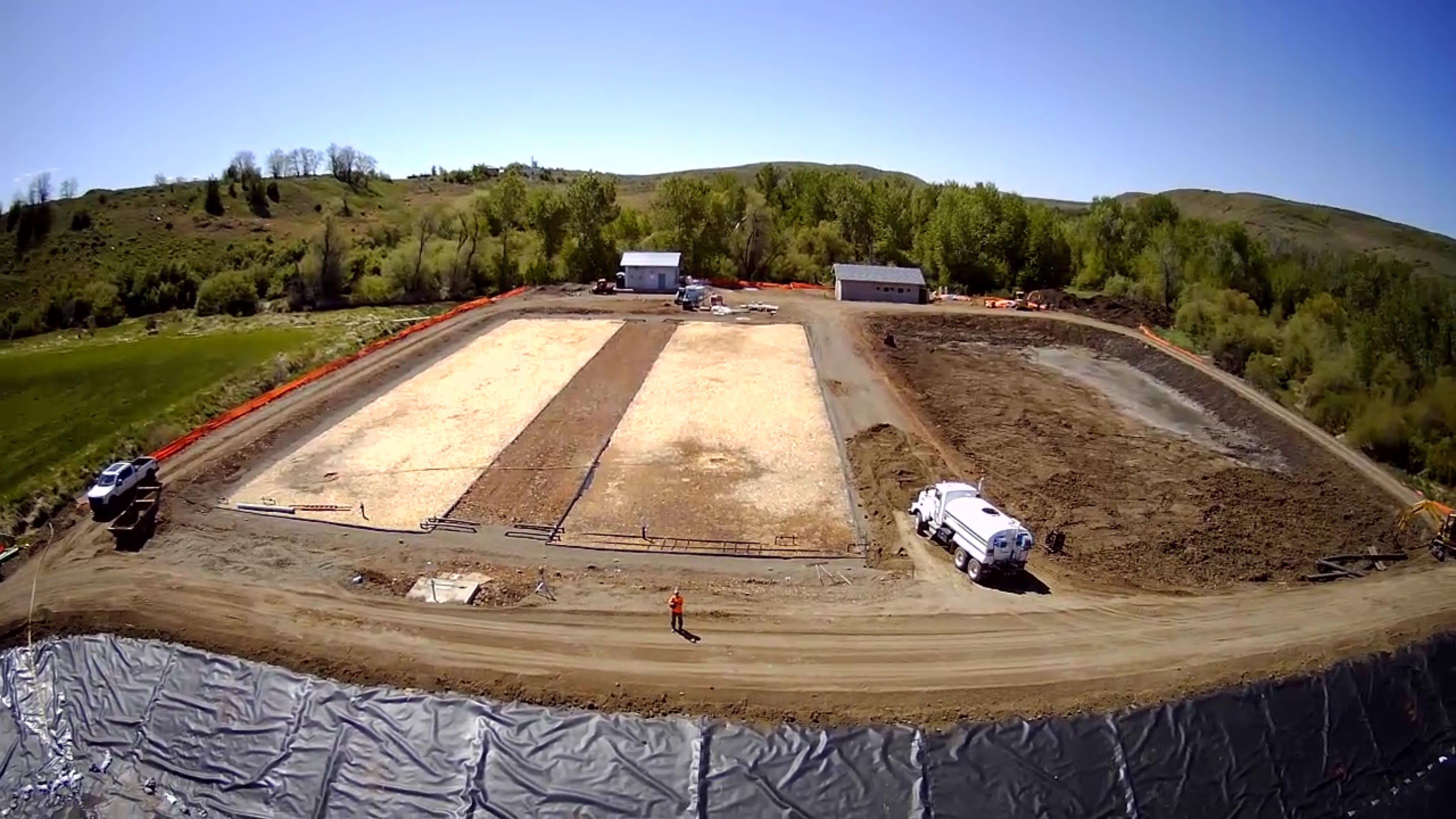
SAGR Installation
Construction began with with excavation of an existing lagoon pit to make room for the two new specialized SAGR cells. The SAGR cell construction involved preparing pads for the SAGR frames to be built. Once the frames were built, a team came in and lined them with HDPE liner. Once the liner was in place, air lines were strung, the structure was filled with washed stone on top of aeration domes. After the rock and domes were in place, filter fabric was put down and nine inches of wood chips were placed on top for insulation.
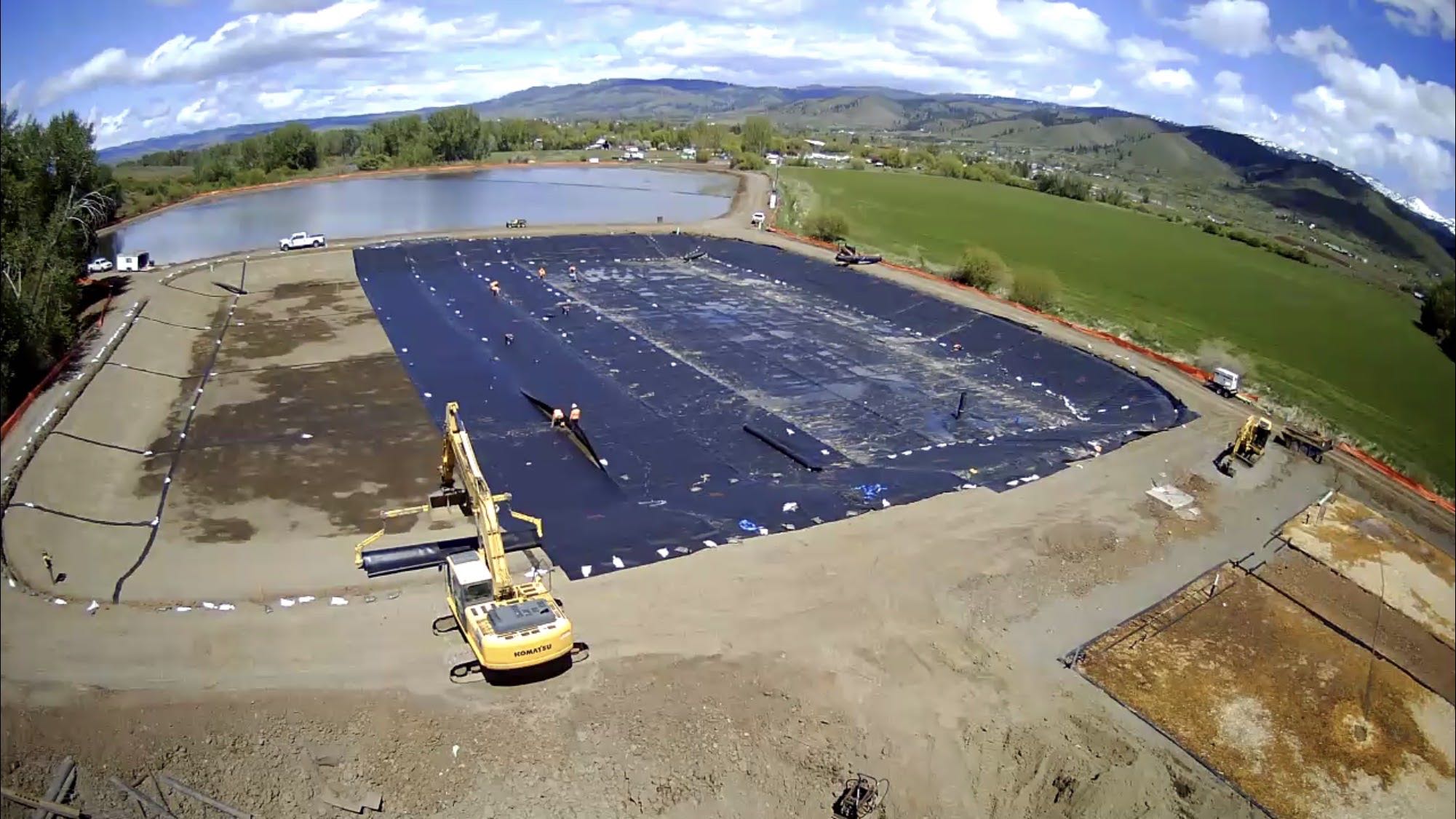
Lagoon Reconstruction
Existing sewer lagoons were failing seepage tests, so reconstruction of the two main lagoons needed to take place. The lagoons were drained first, then the sludge was excavated in order to reshape the existing space to maximize flow intake. After the lagoons were shaped and excavated, a special team came in and lined the bottoms with durable HDPE liner to prevent further seepage into nearby waterways.
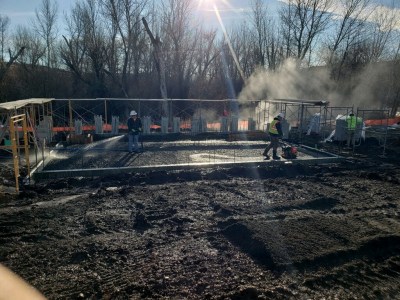
Treatment Building
Like most small towns, Council was utilizing a de-chlorination system to process the waste before discharging it into the nearby Weiser River. The project included an upgraded building that houses a UV system to sanitize waste, which is both more cost effective and reliable.